UN World Water Day

UN World Water Day
What will happen if there is no clean drinking water? It sounds like something unrealistic, but, unfortunately, this is a common situation for every third person in the world, because only 1% of the water on Earth is safe for consumption.
Every year on March 22, the World Water Day is celebrated around the world. The idea originated in 1992 at the UN Conference on Environment and Development in Rio de Janeiro, Brazil. The purpose of the Water Day is to draw attention to the availability and quality of water resources and encourage everyone to consider the value of water.
The World Water Day reminds us of the need to preserve and care for the water resources of our planet, because already today more than 2 billion people are forced to live without access to water that is safe for consumption. The purpose of this day is to draw attention to the measures to be taken to overcome the global water crisis. This is part of an international campaign to ensure global water supply and sanitation by year 2030.
Water and Equality
This year, World Water Day draws attention to how closely access to water is linked to gender equality. In many parts of the world, safe drinking water is not available close to people’s homes. In countries facing severe water scarcity and widespread poverty, the responsibility for securing water often falls on women and young girls – in many cultures, this has historically been considered a woman’s duty. Water collection is closely connected to household tasks such as cooking and washing dishes and clothes, and these responsibilities are traditionally assigned to women. As a result, they often have to walk long distances to water sources and carry water home in large containers. This is physically demanding work that takes up a great deal of time and energy. Such a burden of responsibilities reduces girls’ opportunities to attend school regularly or devote enough time to their studies. In the long term, this affects their access to education, future choices, and their potential to participate in community life.
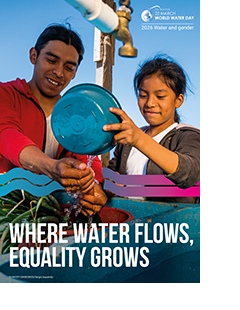
Alongside this division of roles in developing countries, women around the world are often less involved in decision-making related to water management. However, experience shows that when women actively participate in addressing these issues, water services become more inclusive, sustainable, and better suited to everyone’s daily needs. Therefore, it is important that everyone – both women and men – can take part in solving problems and thinking about how to protect and use water.
Water is essential for everyone. By ensuring equal access to water and equal rights to participate in decisions about its management and use, we create a fairer, happier, and safer future for all. Where water flows, equality grows. Learn more!
Be a driver of change – care for water and support equality!